VERAXONNeural Music

Marcus Milosevic · VERAXON

Sound that feels
unmistakably yours.

I design sound for games, film and brands, produce custom music and help artists find a sound that is theirs. The craft comes from years of production. The thinking comes from applied study of music psychology and auditory perception.

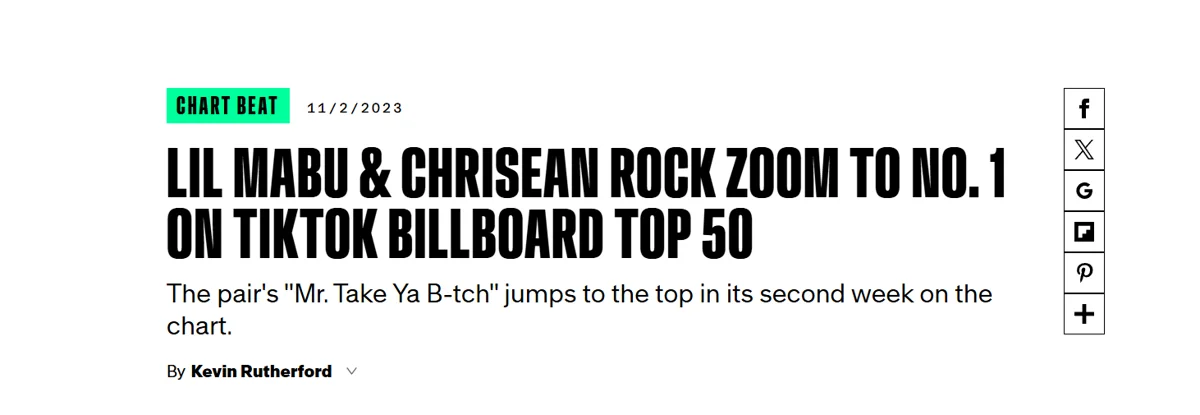
TikTok Billboard Top 50
#1

“MR. TAKE YA B*TCH”, a record I am credited as one of the producers on.

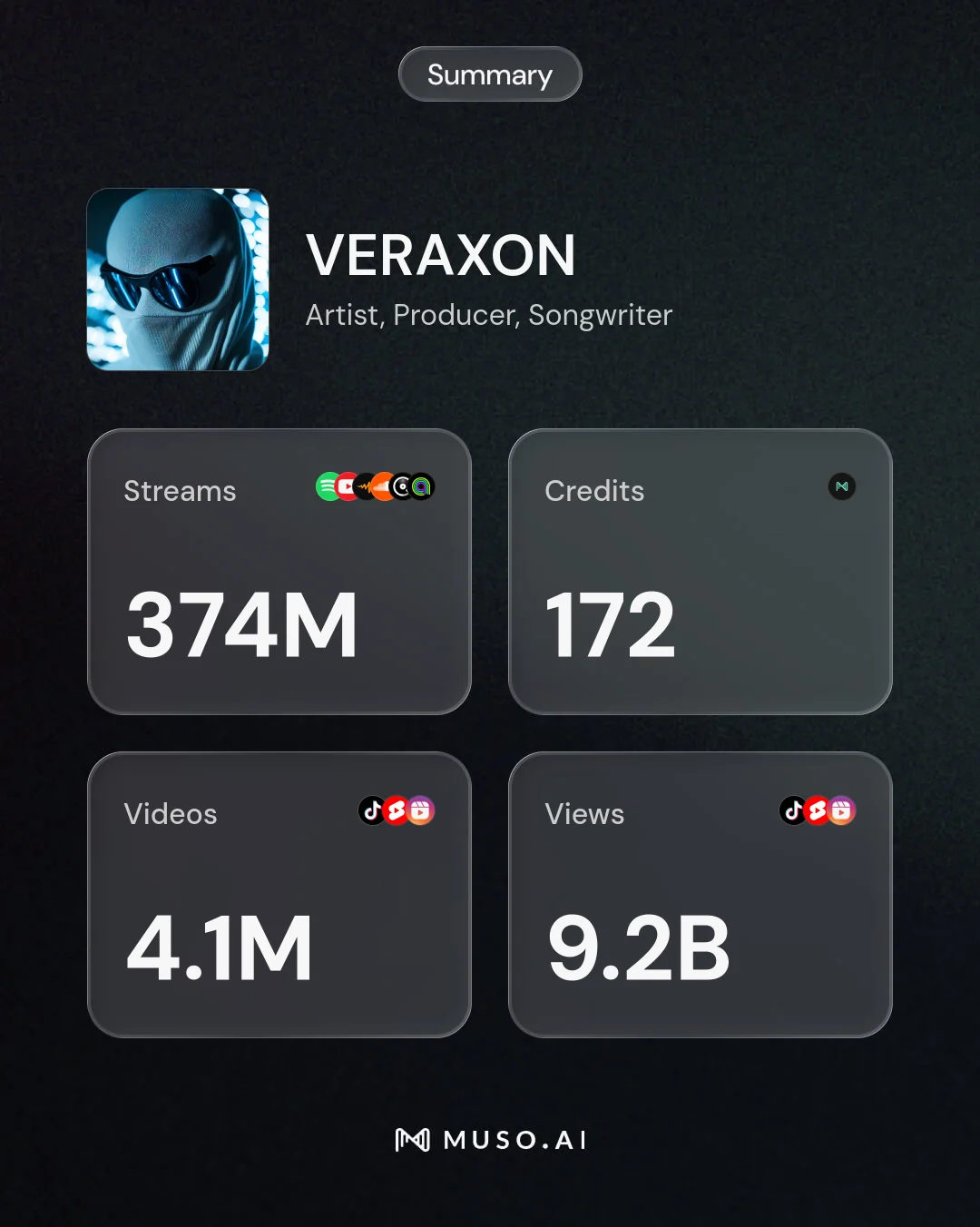
Cross-platform streams
500M+

Reported total across my production credits.

Social views
9.2B

Muso.ai snapshot. View it

Making music since
2018

Production, composition and sound design.

Lil MabuRoy MichaelKase FenleyLil BabyNBA YoungBoyChriseanRockChris GreyACRAZELil RT
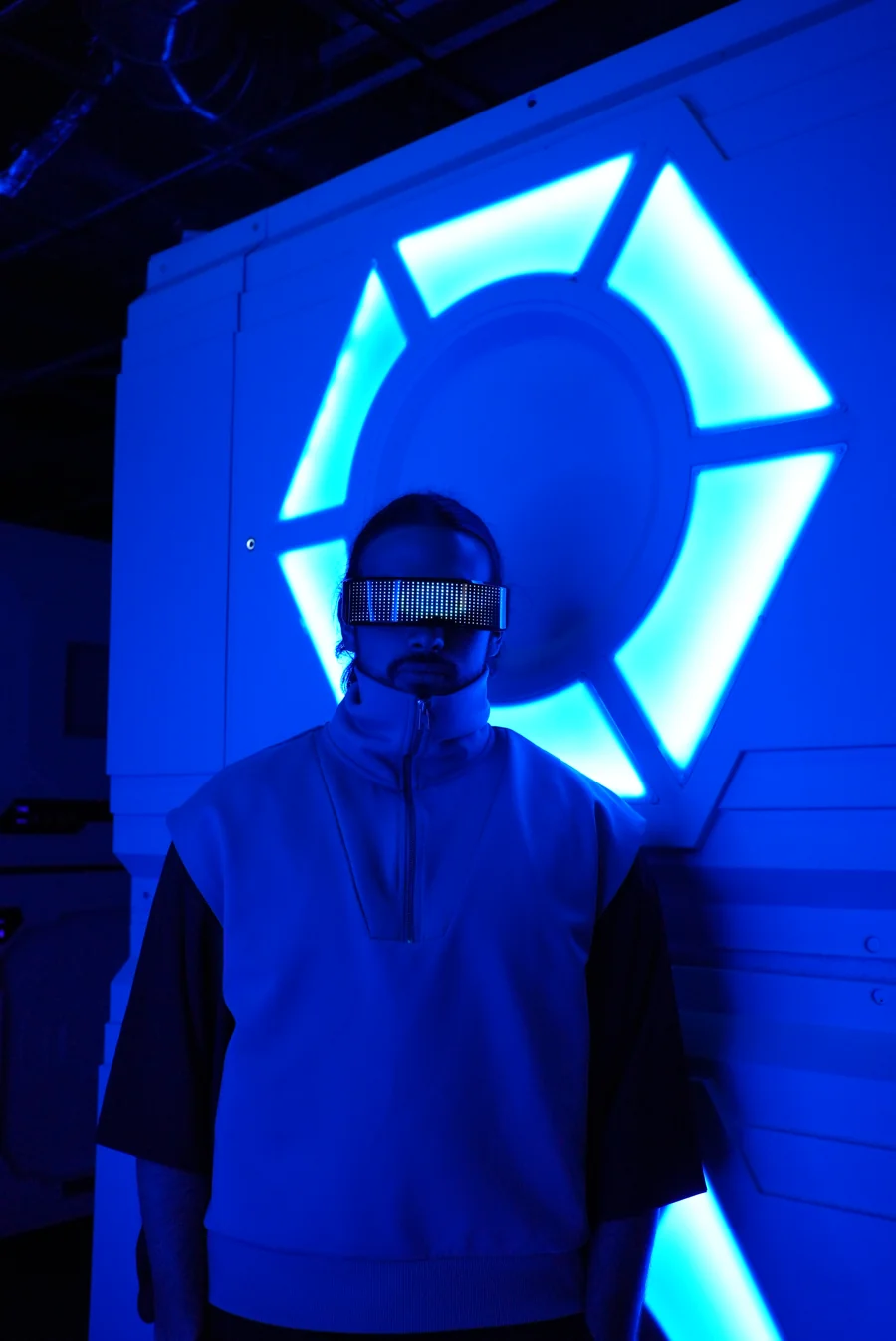
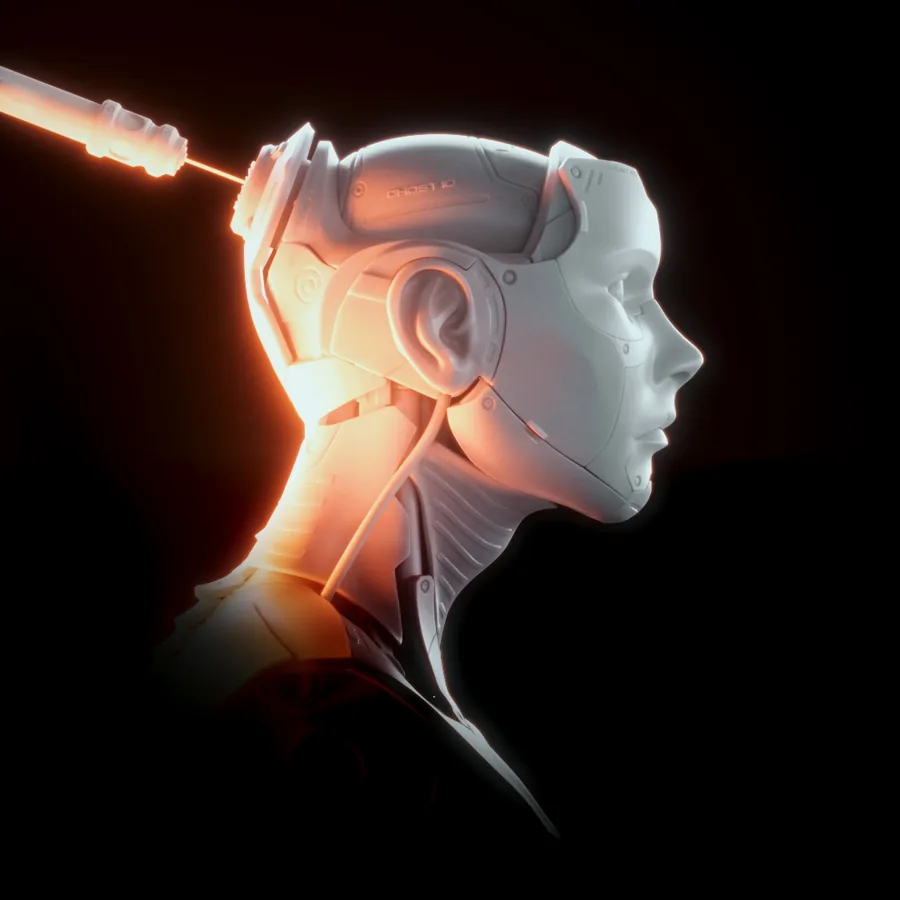
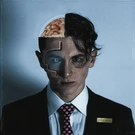
Marcus Milosevic, VERAXON, wearing an illuminated visor in a blue-lit space.
Marcus MilosevicProducer · Composer · Sound designer

01 · Who I am

I wasn’t trying to study music. I was trying to understand why it works.

I started making beats in 2018, while I was still at school. When COVID arrived I didn’t go straight to university. I made music constantly.

Somewhere in that obsession the question changed. Not “how do I make this sound better?” but “why does this make someone feel anything at all?” Why does one melody vanish and another stay for years? Why do some sounds feel like part of who someone is?

That question pulled me into music psychology, auditory perception, attention, emotion and memory. I tested what I read inside real records, and the work went on to live with artists including Lil Mabu, Lil Baby and NBA YoungBoy.

Then the question grew past records. Brands and designers knew what they looked like. What did they sound like? Games had worlds and rules. What did those feel like to hear? That became Neural Music, my framework for finding the identity in something and translating it into sound.

“Your sound is not something I give you. It is something we uncover.”

02 · Skills

Four disciplines.
One question underneath: who is this, and what should it sound like?

01

Sound design

Games · Film · TV · Brands · Artists

Effects, interface sounds, ambiences, drums and synths built from scratch, so every sound belongs to its world. I design for how people actually hear: what the ear catches first, what the brain tires of, and what the mind remembers.

  • Game SFX, UI and feedback sounds
  • Ambiences, textures and world tone
  • Trailer, film and TV sound design
  • Drums, synths and sound kits from scratch
How I approach it

02

Custom music production

Artists · Games · Film · Brands

Original music written and produced around the person, project or story, instead of forcing the brief into a generic sound. We can start from references, a demo, a picture, a game loop or simply a feeling.

  • Composition, production and arrangement
  • Score, loops and themes for games and picture
  • Sonic palette development
  • Stems, instrumentals, alt mixes and cutdowns
$500 to $1,000 per track

03

Sonic branding & brand sound consultation

Brands · Fashion · Studios · Products

A brand already has a look. I build what it sounds like: a recognisable system of sound drawn from its identity, values, visual language and audience, from a single audio logo to a whole sonic world.

  • Sonic identity strategy
  • Audio logo and sonic signature
  • Campaign, product and interface sound
  • Consultation before anything is produced
From $80 an hour

04

Sonic identity coaching & assessment

Artists · Creators

Most artists don’t have a talent problem. They have an identity problem. In 1:1 sessions I help you find the thread under your references and unfinished songs, and turn it into a production language you can keep using.

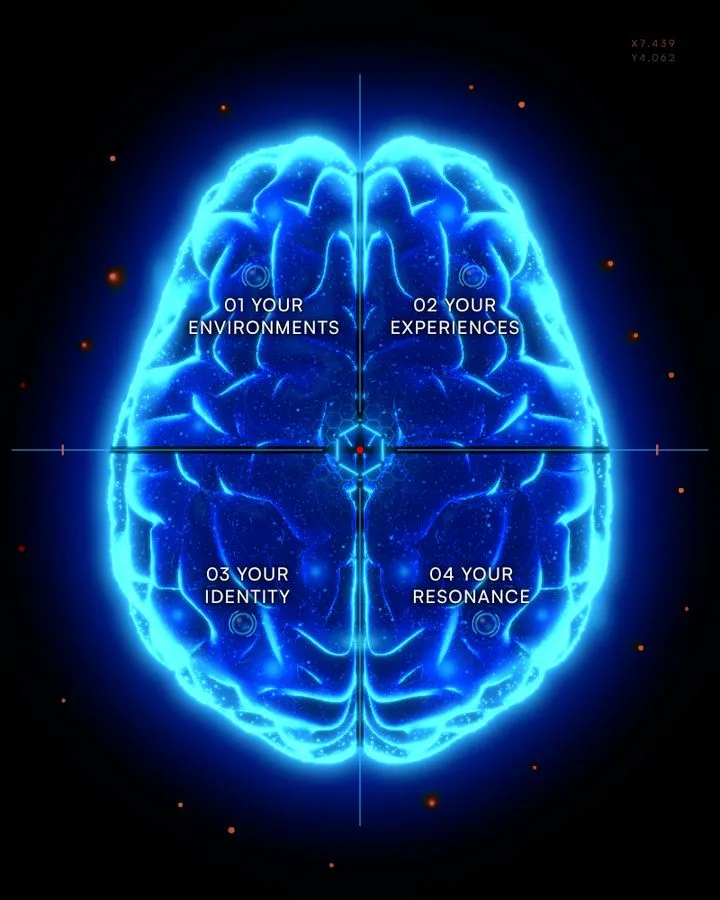
It builds on Neural Music’s Inner Sound model: four rooms, in order. Where you were placed, what you lived there, who you became, and what resonates with you.

$50 for 60 minutes
The Inner Sound model: a glowing brain divided into four rooms, your environments, your experiences, your identity and your resonance.

03 · Sound design

Sound design doesn’t end at the speaker. It starts with the listener.

A game, a film, a brand or an artist: every sound I make passes through three stages before it means anything. The ear has to hear it, the brain has to notice it, and the mind has to decide what it means. Psychoacoustics, neuroscience and psychology each shed the most light on one of those stages, so I design with all three.

  1. The ear · Psychoacoustics

    What you hear isn’t what’s in the file.

    Hearing is a translation, not a recording. The ear is most sensitive in the upper midrange, so how loud a sound feels depends on its frequency. A louder sound can hide a quieter one close to it in pitch, which is called masking. Much of what tells you what made a sound lives in its attack, the first fraction of a second. And the brain will hear a bass note from its harmonics alone, even when a small speaker can’t play the note itself.

    What I do with itShape every attack on purpose, give each layer its own space in the spectrum, and design low end that still reads on a phone.

  2. The brain · Neuroscience

    The brain listens for change.

    The auditory system is tuned to what’s new. A sudden onset can turn your head before you’ve thought about it, and a sound repeated unchanged slowly drops out of attention. The brain is also constantly predicting what comes next. One well-known study of musical chills linked dopamine release to both the build-up and the peak, suggesting anticipation is part of the reward.

    What I do with itVariation where a sound has to stay fresh, space and build-up before the moments that matter, and rhythm placed where the body should move.

  3. The mind · Psychology

    Much of meaning is learned, and it sticks.

    A sound heard alongside an event, a feeling or a brand often enough becomes a cue for it, and familiarity tends to breed liking, up to a point. People also link sounds to shapes and sizes with surprising agreement: higher, brighter sounds tend to feel smaller and sharper, lower and rounder ones bigger and softer. And what someone grew up hearing shapes what feels like theirs.

    What I do with itChoose timbres that already suggest the right character, repeat what should become recognisable, and build palettes from what already means something to the person.

  4. Together · One listener

    Get one wrong and the other two can’t save it.

    A sound passes through all three stages in well under a second. A brand motif buried under a voiceover barely registers, however clever it is. A crisp interface click that repeats identically can start to irritate. A huge impact that doesn’t match what the audience expects can just feel wrong. That’s why I don’t treat these as three subjects. They describe one listener.

Same principles, four kinds of work

The medium changes what matters most. The listener doesn’t.

Games

Feedback the player feels before they think.

Ear
Hits and interface cues get their own frequency space, so they read through music and chaos.
Brain
Designed variations stop the hundredth sound feeling like a copy of the first, so it’s slower to grate.
Mind
Each cue stays consistent, so players can learn what it means and react without looking.

Film & TV

Sound that shapes how the audience feels about the picture.

Ear
Contrast does the work. A drop to near silence can make the next impact land harder.
Brain
A sound locked to an image is heard as coming from it, so a punch can sound heavier than any real one.
Mind
Low drones and dissonance often read as unease. Warmth and space tend to read as calm.

Sonic branding

A few seconds that mean one brand.

Ear
Built for phone speakers, ads and noisy rooms, with the identity carried in the midrange rather than the sub.
Brain
Short, distinctive and kept consistent. Unlike game feedback, sameness is the point: it’s how a sound gets recognised.
Mind
Its shape and timbre are chosen to suggest the brand’s character before anyone says the name.

Artists

A sound that’s recognisably yours.

Ear
Drums and synths designed from scratch, so the palette isn’t the same preset everyone else is using.
Brain
Familiar enough to feel right, new enough to stand out: an expectation, then a turn.
Mind
Built from what already means something to you: where you grew up and what you never stopped playing.

From scratch

The sounds that carry an identity, I build myself.

Presets and sample packs, mine included, are made for many people to share, so they’re a start, not a signature. When I make sound for someone, the drums, the lead synths and the signature textures start from nothing, and every one is tested in the mix, on a phone speaker and on repeat. It’s slower. It’s also how you end up with a sound nobody else has.

  1. 01 · StartSourceA raw waveform, noise or a recording of my own.
  2. 02 · EarShapeAttack, body and tail sculpted for how the ear reads them.
  3. 03 · BrainMovementVariation, modulation and timing, so it holds attention instead of fading out.
  4. 04 · MindCharacterSaturation, texture and space chosen for what the sound should mean.

Why it matters

Good ears do most of the work. Knowing why lets me do it on purpose.

Plenty of great sound designers work by ear alone, and the ear is a brilliant tool. It’s also easy to fool: it adjusts to whatever it has just been hearing, it tires over a long session, and a phone sounds nothing like a studio. What’s known about hearing, attention and meaning lets me make each call deliberately, explain it to a client and keep it consistent across a whole project. I think every sound designer should learn it.

Common shortcuts compared with listener-first sound design
The shortcutHow I work
Starts fromA library, and what sounds coolWho is listening, and what they should feel or do
Judged byHow it sounds soloed in the studioHow it reads in the mix, on real speakers, the hundredth time
RepetitionOne file, played every timeVariation where it should stay fresh, sameness where it should be recognised
MeaningTaste aloneTaste, checked against how association, expectation and memory work
The resultA sound that impressesA sound that fits, and stays theirs

These are working principles drawn from online coursework and my own reading in psychoacoustics, music psychology and auditory neuroscience. They guide decisions; they don’t promise a particular listener response.

The toolkit

Professional tools, chosen for control.

I work in Cubase, design sounds from scratch with Kilohearts’ modular instruments and effects, and finish them with a curated chain of leading third-party plugins, so the result is precise, clean and ready to drop into a project.

  • CubaseDAW · production, editing and mix
  • KiloheartsPhase Plant and the Kilohearts bundle
  • MYTH · Novum · KultSynthesis and resynthesis for texture
  • Third-party chainLeading plugins for shaping, space and finish

What you get

  • 01A sound brief agreed first: who’s listening, what they should feel and where they’ll hear it
  • 02Original sounds designed from scratch, with variations, named and organised
  • 03Stems, alternates and formats ready for the engine, the edit or the campaign
  • 04A short sound guide, so the language stays consistent as the project grows
Scope your sound design

04 · Selected work

Who I’ve made sound for.

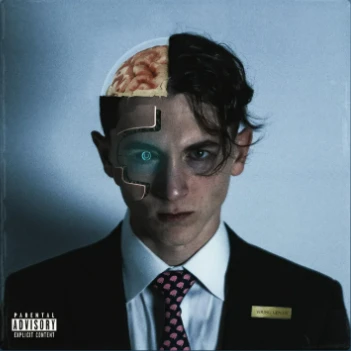
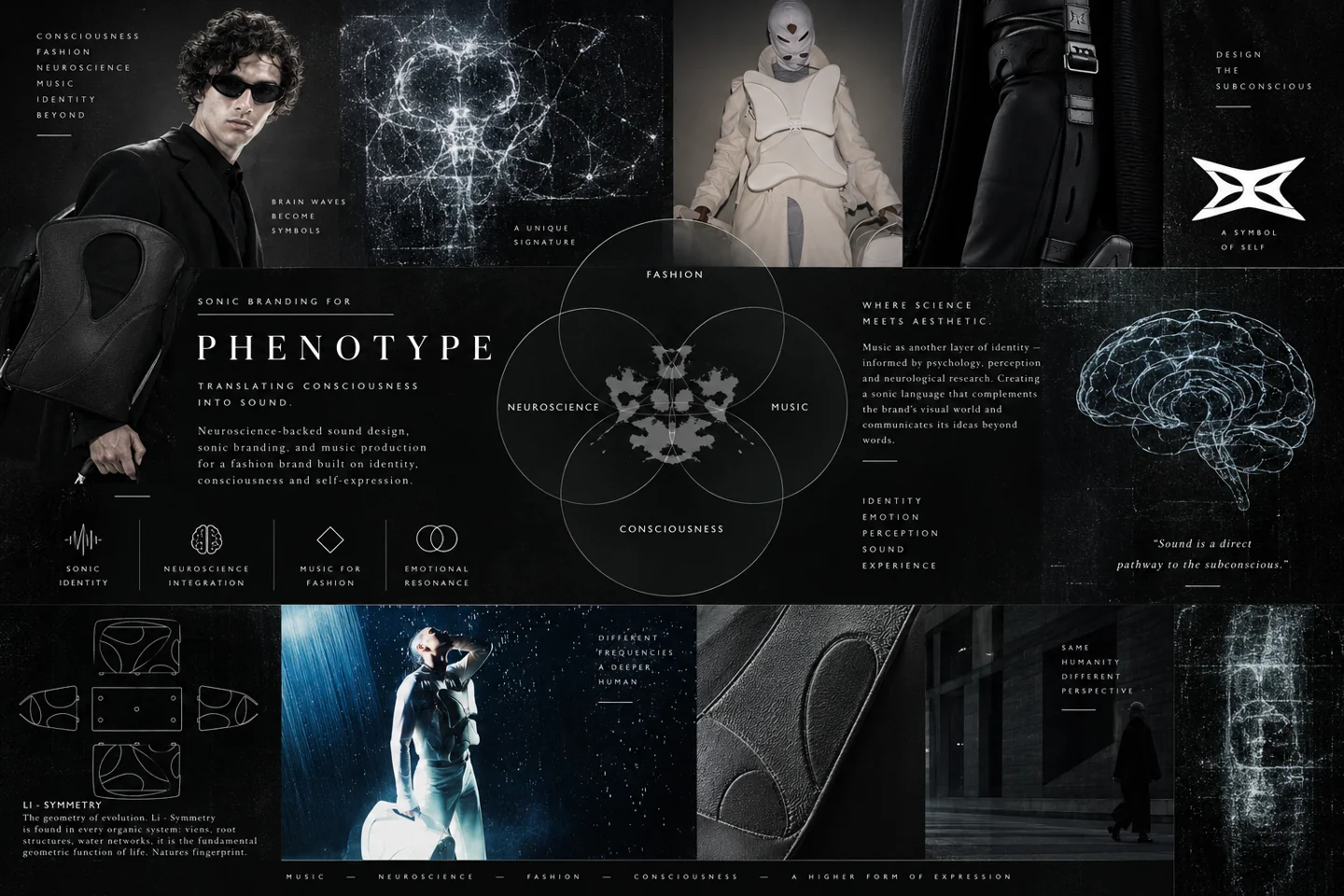
Phenotype concept board connecting fashion, identity, music and perception through clothing and neural imagery. Inspect board ↗

File 003 · Sonic branding · Concept

Phenotype

Identity has more than one expression. Phenotype explores identity through fashion, perception and sound, treating music as another visible, audible expression of the person underneath.

Sonic-branding concept and music direction. No launch metrics are claimed.

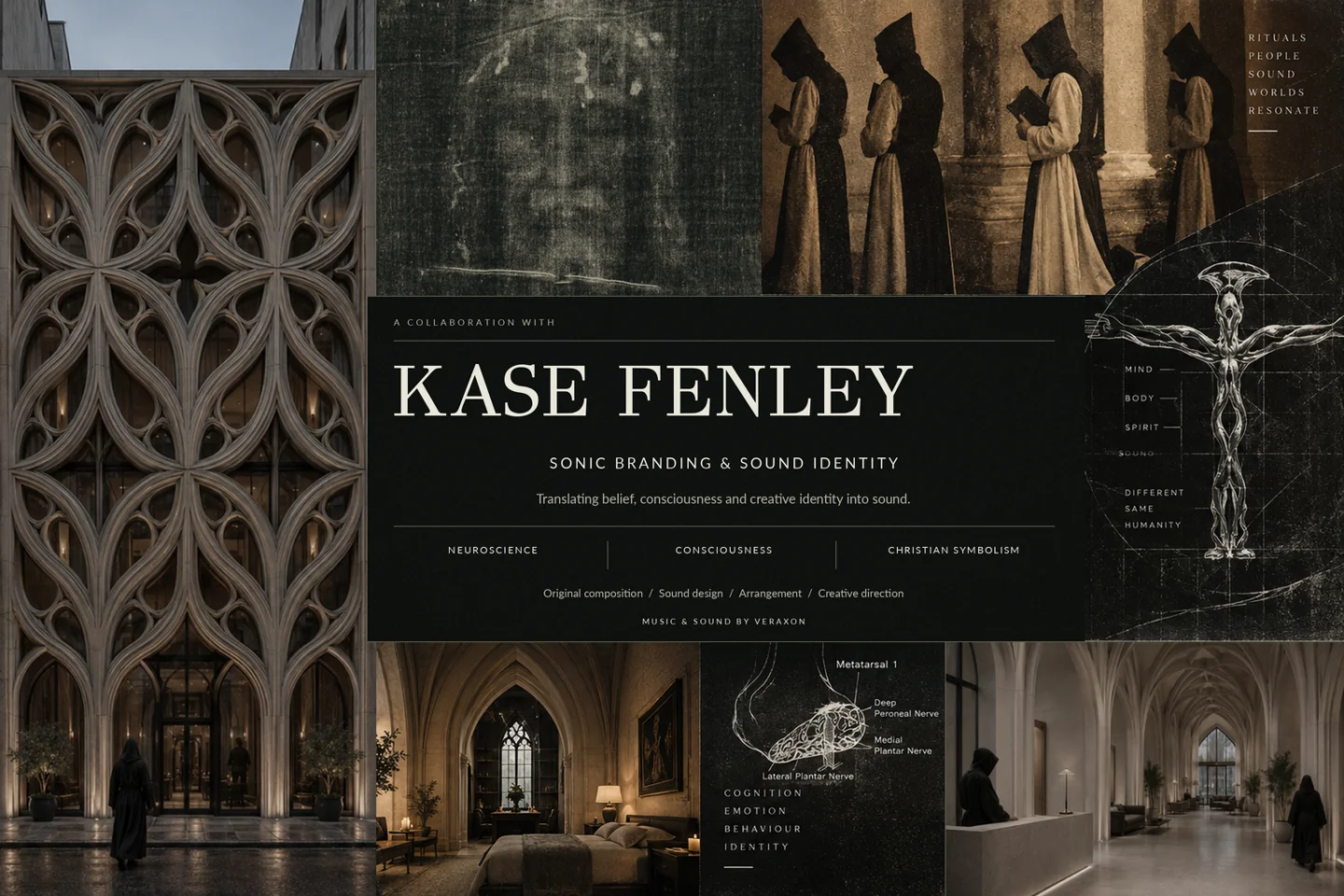
Kase Fenley sound-identity board with stone architecture, human diagrams and symbolic imagery. Inspect board ↗

File 004 · Sound design · Sound identity

Kase Fenley

A world of belief, consciousness and symbolism. The music’s job was not to decorate that world but to make it audible.

Original composition, sound design, arrangement and creative direction.

Sound design kits · Neural Music

Sounds other producers build with.

For my own company, Neural Music, I design multi-kits under my producer name NAT08: drums, textures, synth presets and MIDI, sold to producers online.

06 · The Neural Music approach

Before I decide what something should sound like, I need to understand what it is.

The same five stages run under a single artist session, a brand identity or a game’s whole sound. The output changes. The process stays the same.

  1. Discovery

    Where you are now: what you’re making, what you want it to communicate, what you’ve tried and where the friction is. For a studio, that means the game, the audience and the feel you want.

  2. Excavating

    Beneath references and trends to the identity underneath: influences, memories, taste, visual language, values and the patterns that keep appearing.

  3. Integrating

    The pieces become a system. How those instincts translate into tension, rhythm, density, space, timbre, tempo, harmony and texture.

  4. Translation

    Identity becomes sound through composition, production, arrangement, sound design and sonic direction.

  5. Delivery

    Not only the files, but a language you understand well enough to keep using: a track, a sonic identity, a sound logo, a palette or a full set of game audio.

07 · Services

Ways to work together.

From one focused conversation to an entire sonic world. All prices in USD; sound design for games, film and TV is scoped like a production or branding project.

01 · Sonic branding for brands

$1,000 to $10,000 per project

Your brand has a visual identity. What does it sound like?

A recognisable system of sound built from your identity, values, visual language and audience. Smaller projects focus on one asset or signature; larger systems with several assets and applications extend toward $10K.

  • Sonic identity strategy
  • Audio logo / sonic signature
  • Original branded music
  • Campaign and social music
  • Product and interface sound
  • Stems, cutdowns and versions
  • Creative direction
  • Implementation guidance

Start with a free discovery call.

Scope your sonic identity

02 · Custom music production

$500 to $1,000 per custom track

Production built around identity.

Original music for an artist, project, game or story. Final pricing depends on complexity, revisions and deliverables.

  • Production and composition
  • Arrangement and sound design
  • Editing and mix refinement
  • Stems, instrumentals, alt mixes

Start with a free discovery call.

Book a production call

03 · Brand sound identity consultation

$80 per hour

Clarity before production.

For founders, designers, creative directors and studio leads who know the brand or game visually but need its sonic language. We turn identity, audience and references into practical sonic principles and a next-step roadmap.

Your first discovery call is free. Consultation sessions are $80 per hour.

Book a free discovery call

04 · 1:1 artist sound identity session

$50 per 60 minutes

Less imitation. More you.

A focused session on your identity, influences, sound palette, vocal character and next creative decisions. The goal isn’t to sound more professional. It’s to sound more recognisably you.

Payment is required to confirm your session.

Pay & book a 1:1 session

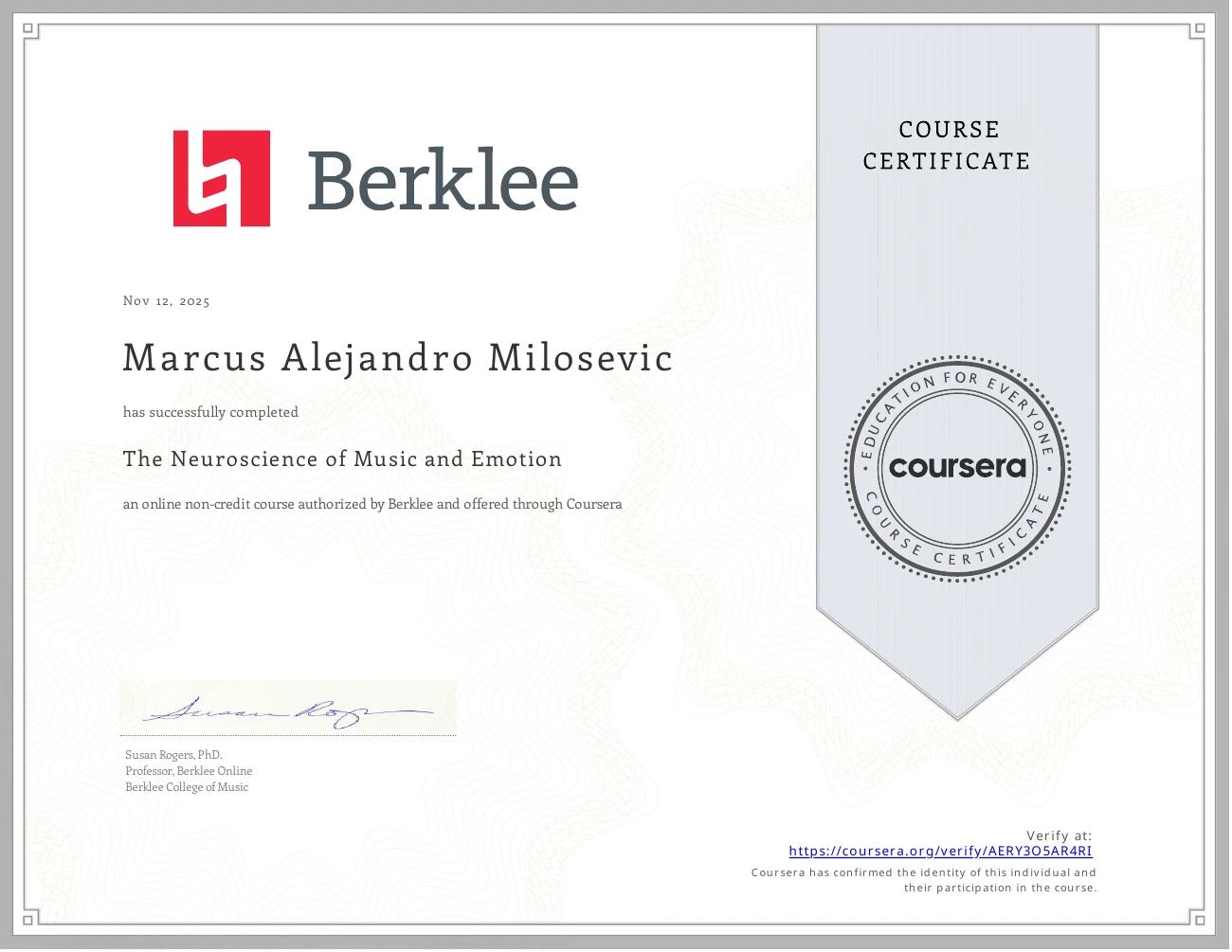
08 · Study

Theory only matters when it survives contact with the work.

Alongside production I keep studying music psychology, auditory perception, attention, emotion and memory, and test it inside real projects. Science informs the framework. It doesn’t replace taste.

09 · Start

You don’t need to know exactly what it should sound like.

If you already know the sound, I’ll help you make it. If you only know the feeling, we can start there.

Project discovery calls are free. Coaching & assessment sessions are $50 for 60 minutes, paid upfront.

Book a call

What would you like to work on?

Choose your service. Discovery calls are free; coaching sessions are paid upfront.

Sonic brandingFree discovery call Custom music productionFree discovery call Brand sound identity consultationFree discovery call Artist sound identity sessionCoaching & assessment · $50 / 60 minutes · Pay upfront

File 001 · Production

Lil Mabu

Watch the videos. Explore the music. 8 videos · 8 tracks

SHOOTABOO · Official visualizer

If a video doesn’t play here, use “Watch on YouTube” above.

Choose a track to preview, or open it on Spotify.

↗
↗
↗
↗
↗
↗
↗
↗

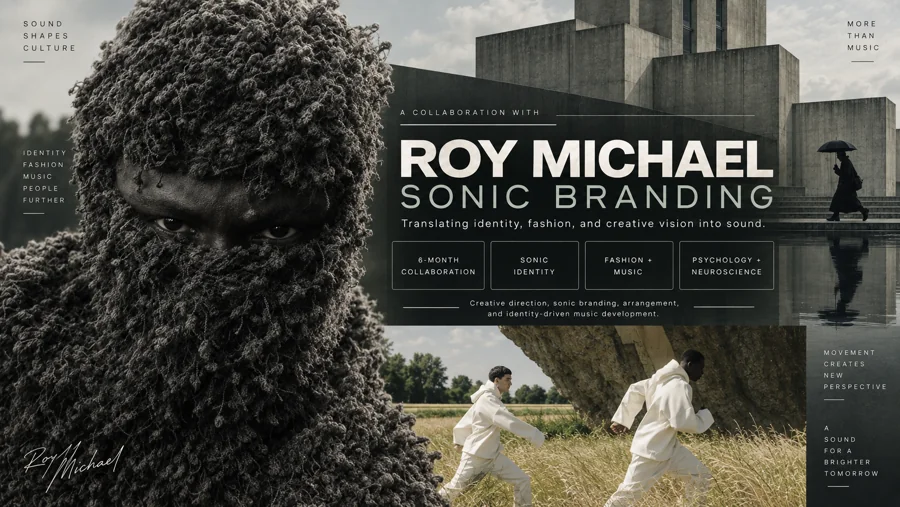
File 002 · Sonic branding · Fashion

Roy Michael

Hear the music. See the brand it belongs to.

Creative direction, sonic branding, arrangement and identity-driven music development.

View the visual board

Open full image ↗